

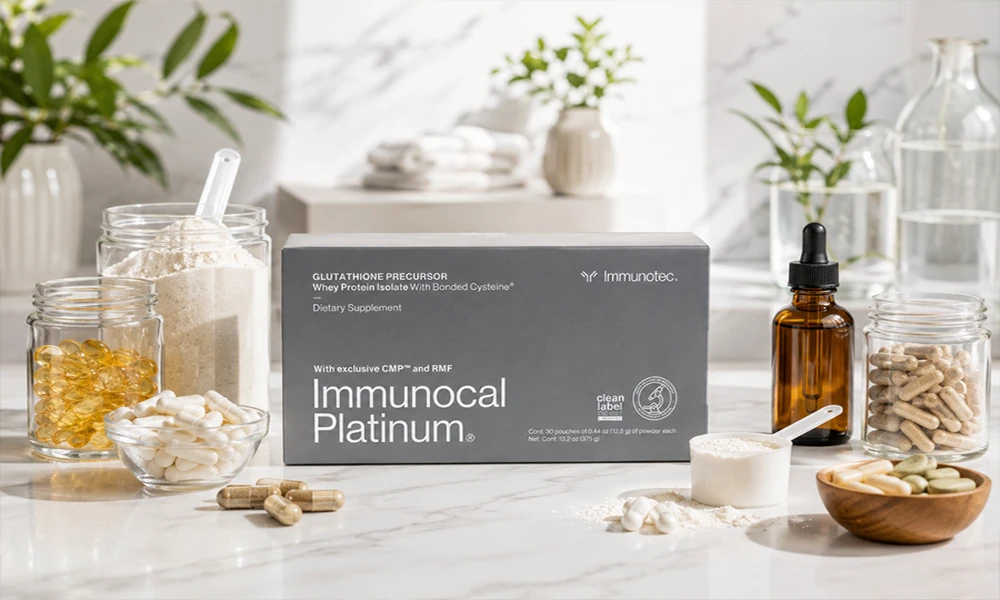
Glutathione is an antioxidant produced naturally inside the body. It helps cells manage oxidative stress and supports several normal processes. As interest in glutathione has grown, so has the number of supplements available.
Some products contain finished glutathione. Others supply amino acids the body uses to make it. Specialized whey protein products such as Immunocal take this second approach.
Understanding the differences can help you choose a glutathione supplement based on its ingredients, research, quality, and intended use.
What Does Glutathione Do in the Body?
Glutathione is made from three amino acids: cysteine, glycine, and glutamate. It is produced inside cells throughout the body, with the liver playing an important role in glutathione production and management.
One of glutathione’s main jobs is helping the body manage free radicals. These unstable molecules are created during normal activities such as breathing, digesting food, exercising, and turning food into energy.
The body usually manages free radicals through its natural antioxidant defenses. Oxidative stress can develop when the production of free radicals becomes greater than the body’s ability to control them.
Glutathione helps neutralize some of these molecules. It also helps recycle certain other antioxidants and supports normal cell and liver functions.
These roles do not mean that glutathione supplements prevent or treat disease. Glutathione is one part of a much larger biological system.
Direct Glutathione Supplements
Direct supplements contain glutathione as the main ingredient. They may be sold as capsules, tablets, powders, liquids, sprays, or liposomal formulas.
Liposomal glutathione surrounds the ingredient with small fat-like particles. Manufacturers use this method to help protect glutathione as it passes through the digestive system. However, the quality and design of liposomal products can differ.
Research has shown that some oral glutathione supplements can increase measured glutathione levels. Results may depend on the formula, serving size, length of use, and the person taking it.
A higher amount on the label does not automatically mean a better product. Consumers should also consider the form, additional ingredients, testing, and available research.
Glutathione Precursors
A precursor is a substance the body uses to make something else. Glutathione precursors provide the building blocks used for natural glutathione production.
Cysteine is especially important because its availability can limit how much glutathione the body makes. N-acetylcysteine, commonly known as NAC, is one type of cysteine donor used in some supplements.
Other products may combine cysteine with glycine or other supporting nutrients. This approach does not provide finished glutathione. Instead, it supplies ingredients that the body can use to produce glutathione inside its cells.
People comparing precursor products should check the ingredient amounts, research, suggested use, and safety information.
Specialized Whey Protein and Immunocal
Whey protein is made from milk and naturally contains amino acids. Standard whey protein powders are generally marketed for increasing daily protein intake or supporting muscle maintenance.
Immunocal is a specialized whey protein isolate designed to provide cysteine in a form the body can use for glutathione production. It uses a precursor approach rather than supplying finished glutathione.
The way whey protein is processed matters. Excessive heat can change its protein structure. Immunocal is processed to preserve the proteins that provide cysteine.
It is generally mixed into cool or room-temperature water or soft food. It should not be mixed with hot coffee or another hot drink. Consumers should follow the current preparation directions on the package.
Published research has examined Immunocal and other cysteine-rich whey proteins in connection with glutathione levels. This research supports the biological relationship between cysteine availability and glutathione production.
Immunocal should still be viewed as nutritional support. It is not intended to diagnose, treat, cure, or prevent a medical condition.
What Should You Compare?
Begin by identifying the type of support the product provides. Is it finished glutathione, a precursor, or a specialized whey protein?
Next, read the complete ingredient list. Some formulas contain vitamins, minerals, herbs, sweeteners, flavors, or other added ingredients. Make sure you understand what each serving contains.
Look for research that applies to the actual ingredient or product. General information about glutathione does not prove that every supplement will produce the same results.
Product quality also matters. Look for clear labels, lot numbers, expiration dates, contact information, and testing standards. Be careful with companies that promise instant results or claim that a supplement cures serious health problems.
Finally, consider the intended use. Someone wanting a direct glutathione product may choose a different formula than someone who prefers to support the body’s own production with cysteine.
Is It Okay to Take Glutathione Daily?
Some studies have involved daily oral glutathione for several weeks or months. Many participants tolerated the supplements, but long-term safety information remains limited.
There is no single daily amount that is appropriate for everyone. The right choice can depend on the product, age, diet, health, medications, and reason for using it.
Taking a supplement daily does not guarantee better results. More is not always better, especially when several products contain overlapping ingredients.
Follow the directions on the label. Speak with a doctor or pharmacist before beginning daily use if you take medication or have a medical condition.
What Is the Downside of Taking Glutathione?
Oral glutathione supplements may cause stomach discomfort, bloating, cramping, nausea, or loose stools in some people.
Precursor products can have their own side effects and medication concerns. Whey-based products such as Immunocal may cause digestive discomfort and are not appropriate for people with a milk-protein allergy.
Supplement quality is another concern. Products can vary in purity, ingredients, serving size, and manufacturing standards. Poor labeling can make it difficult to know exactly what you are taking.
Intravenous glutathione used for cosmetic skin lightening carries more serious risks. It should not be treated as the same thing as an oral nutritional supplement.
Who Should Not Take Glutathione?
People who are pregnant or breastfeeding should speak with a healthcare professional because there is limited safety information for these groups.
Anyone with liver disease, kidney disease, asthma, a protein-restricted diet, or another medical condition should ask a healthcare professional before using a glutathione product.
People with a milk-protein allergy should avoid Immunocal unless a qualified professional determines that it is appropriate. Milk allergy is different from lactose intolerance, so read the label carefully.
You should also speak with a doctor or pharmacist if you take prescription medication, use several supplements, or are preparing for surgery.
Making an Informed Choice
There is no single best glutathione supplement for every person. Direct supplements provide finished glutathione, precursors supply individual building blocks, and specialized whey protein provides cysteine-rich nutritional support.
If you prefer a precursor-based approach, Immunocal provides specialized whey protein designed to support the body’s natural production of glutathione.
Compare the ingredients, serving directions, research, manufacturing quality, and intended use. A dependable product should provide clear information without making unrealistic promises.
This article is for general educational purposes and is not medical advice. Glutathione supplements and Immunocal are not intended to diagnose, treat, cure, or prevent disease.


